
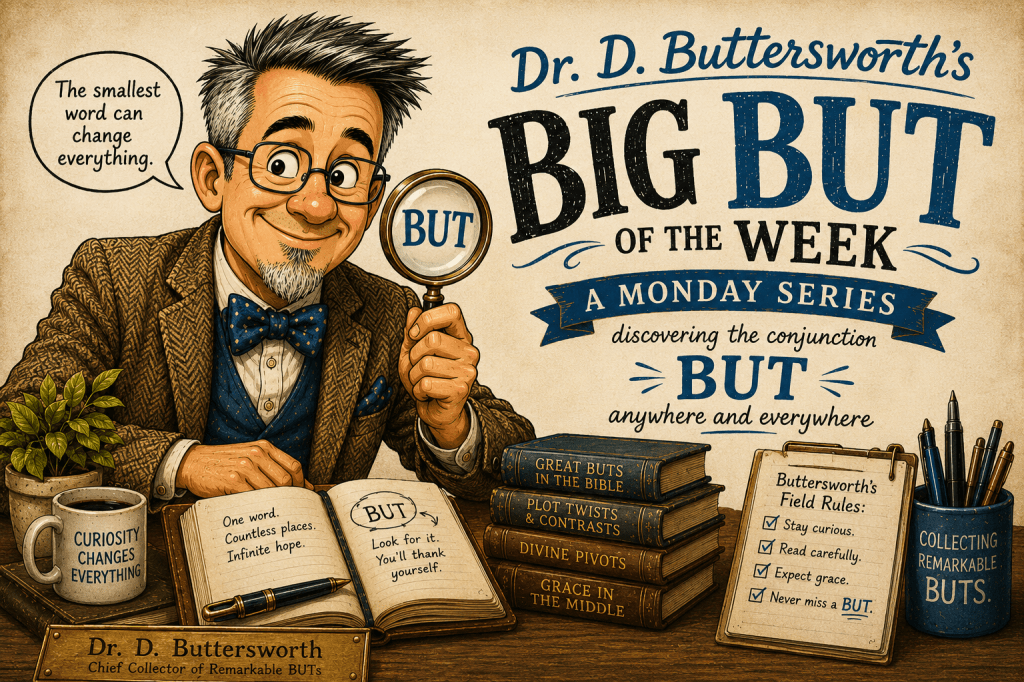
Dr. Buttersworth has encountered a problem. Perhaps you’ve seen this quote floating around the Internet:
“People will forget what you said, people will forget what you did, but people will never forget how you made them feel.”
It is almost always attributed to Maya Angelou. There’s just one little problem.
She probably didn’t say it. At least, not first.
Quote researchers have traced an earlier, shorter version to a guy named Carl W. Buehner, who was credited in a 1971 quotation collection with saying: “They may forget what you said—but they will never forget how you made them feel.”
And now Dr. Buttersworth would like everyone to appreciate the tremendous irony of what has happened here:
We remembered how the quote made us feel. We forgot who said it.
Somewhere, the good doctor is adjusting his spectacles and trying very hard not to look smug.
But enough about attribution. We’re here to talk about that magnificent little three-letter hinge sitting right in the middle of Buehner’s sentence: BUT.
“They may forget what you said—but they will never forget how you made them feel.”
Everything before but sounds almost discouraging to a writer. They may forget what you said.
Wonderful.
We labor over sentences. We move commas around. We delete words, put them back, delete them again, stare at the screen, refill the coffee, and finally produce a paragraph we’re certain future generations will embroider onto pillows.
And apparently our readers are going to forget it.
But.
There it is. That little conjunction changes the destination of the sentence. They may forget the exact words, but something can remain.
The feeling.
The impact.
The thing your words awakened inside them.
That’s worth remembering for those of us who write.
Good writing is certainly about choosing the right words. Words matter. Precision matters. Rhythm matters. Clarity matters. Dr. Buttersworth would never suggest otherwise. He has a reputation to maintain.
But words are rarely the final destination. They are the vehicle.
We use words to carry something from one human heart and mind into another: an idea, an image, a laugh, a wound, a memory, a question, a little courage, maybe even some hope.
Your reader may not remember the sentence that made them laugh out loud. They may not remember the paragraph that made them stop and stare out the window for a while. They may not remember precisely how you described grief, grace, fear, love, regret, forgiveness, or home.
But they may remember that somebody finally put words around something they had felt for years.
That’s the writer’s privilege.
We arrange words on a page knowing full well that many of those words will eventually disappear from memory.
But sometimes what those words do refuses to leave.
And that, Dr. Buttersworth believes, is a pretty powerful little but.

