
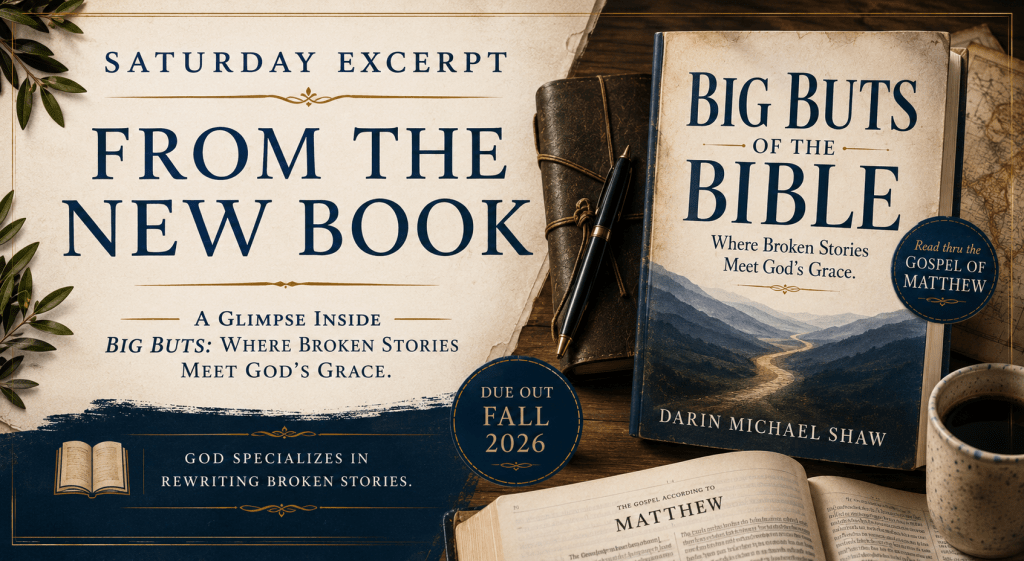
An Excerpt From Chapter 10
Perhaps you’ve heard it: “God loves you and has a wonderful plan for your life.”
That has been a popular introduction for sharing the gospel of Jesus Christ for years. But there’s a problem with it. While it’s true—it’s also very easily misunderstood.
Take that word wonderful for instance. God loves you and has a wonderful plan for your life … and it involves being martyred for your faith—something really good, mind you, like maybe being torn to shreds by a lion or sawn in two in a hollow tree-trunk.
Great! Where do I sign up? How often do you suppose people hear wonderful and think danger and suffering rather than bliss, comfort and contentment?
Jesus didn’t use phrases like “wonderful plan for your life” in talking about the costs of following him. He told it like it is, and that’s where Matthew chapter 10 begins.
Jesus uses several buts to prepare his followers for the adventure. The first might have caused some raised eyebrows.
On my account you will be brought before governors and kings as witnesses to them and to the Gentiles. But when they arrest you …
Uh, excuse me Jesus?
They can expect to be arrested. Notice, he doesn’t say if, he says when. Sounding wonderful to you?
When they arrest you, do not worry about what to say or how to say it. At that time you will be given what to say, for it will not be you speaking but the Spirit of your Father speaking through you.
Now this is a significant but. And perhaps it starts to depict a little bit of wonderful, in realizing this is all a part of God’s plan. You can rest assured that these things, as they unfold, are not a surprise to God, but rather that He is in them.
However, it’s not as if this is the only hardship Jesus’ followers can expect. Just about the time you hear the encouragement that God will speak up through you, Jesus hits you with another but:
All men will hate you because of me, but he who stands firm to the end will be saved.
To what extent? Here’s another big but:
Do not be afraid of those who kill the body but cannot kill the soul. Rather, be afraid of the One who can destroy both soul and body in hell.
Essentially, what he has said is that they should have a healthy fear or reverence towards God. Because people can only do so much to hurt you.
Hazards to Assurances
After posting his Ninety-Five Theses on the door of Wittenberg’s Castle Church in 1517, Martin Luther experienced years of persecution, ranging from excommunication from the Church to having the Pope issue a writ for his execution.
He found comfort in Psalm 46. The text inspired him to pen the lyrics to one of the great hymns of the faith, A Mighty Fortress Is Our God. In the song’s last verse, Luther concluded: “The body they may kill; God’s truth abideth still: His Kingdom is forever!” Keep in mind, when he wrote those words, the potential of ‘the body they may kill’ was very real to him.
Jesus used that but— Do not be afraid of those who kill the body but cannot kill the soul—to contrast the life temporal, here, now, and fleeting (body), and life eternal (soul). This tells us there is something more to this life than meets the eye. We see the material part, but we also possess an immaterial part. Don’t just concern yourself with the body, but understand that we are both, body and soul.
Now if all of this talk of being arrested, forced to testify, potentially being killed and even the warning that his followers should fear God’s wrath had Jesus’ followers unsettled, He turned immediately to comforting them. And this is where we do well to focus—His love endures and abides.
Our Heavenly Father cares greatly for the smallest and weakest of creatures. He looks after our every need. He looks after each one of us so thoroughly, in fact, that He keeps count of the very hairs on our heads. Of course, with every year of my adult life, that’s gotten markedly easier for God to do with me.
Jesus concludes: So don’t be afraid, you are worth far more to God.And indeed, you are.

